Outdoor Advertising, also known as Out-of-Home (OOH) Advertising, is a powerful marketing strategy that helps businesses increase brand visibility and reach potential customers in high-traffic locations. Whether you're promoting a product, service, or event, platforms like Book Ad Space make it easier to connect with outdoor advertising service providers and find the right advertising solutions. In this guide, we'll cover the top 10 outdoor advertising ideas to help your business attract attention and maximize its marketing impact.
What is Outdoor Advertising?
Outdoor Advertising, also known as Out-of-Home (OOH) Advertising, is a form of marketing that promotes products, services, or brands through advertisements placed in public spaces where people can easily see them. Common examples include billboards, digital screens, transit advertising, bus shelters, mall displays, airport advertising, and pole kiosks.
Unlike online advertising, outdoor advertising reaches people while they are commuting, shopping, traveling, or spending time outside their homes. Its high visibility, broad audience reach, and repeated exposure make it an effective marketing strategy for increasing brand awareness, promoting events, and driving customer engagement.
Why Outdoor Advertising Matters for Modern Businesses
In today's competitive market, outdoor advertising helps businesses stand out by reaching customers where they live, work, travel, and shop. Unlike digital ads that can be skipped or blocked, outdoor advertisements remain visible 24/7, creating repeated brand exposure and increasing recall among potential customers.
Modern businesses use Out-of-Home (OOH) advertising to build brand awareness, promote products and services, support local marketing campaigns, and drive customer engagement. From billboards and transit advertising to mall displays and digital LED screens, outdoor advertising offers a powerful way to connect with a broad audience and strengthen both online and offline marketing efforts.
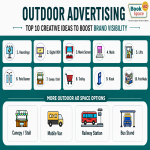
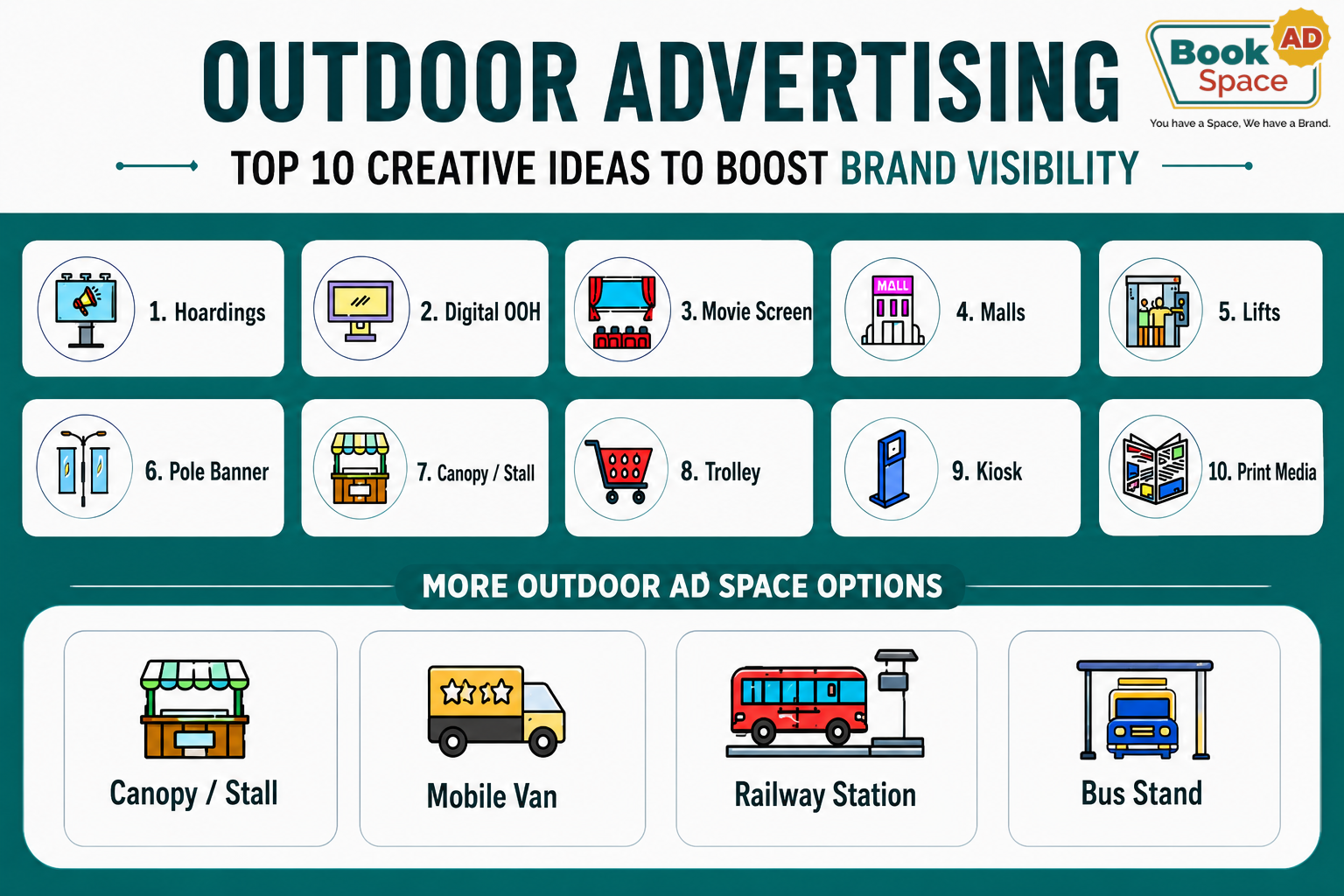
Top 10 Creative Outdoor Advertising Ideas
Choosing the right outdoor advertising format can significantly improve your brand's visibility and help you connect with your target audience. Here are ten creative outdoor advertising ideas that businesses can use to maximize their marketing impact.
1. Billboard Advertising
Billboard advertising is one of the most effective forms of outdoor advertising. Strategically placed on highways, busy roads, and commercial areas, billboards help brands reach thousands of people every day. They are ideal for product launches, brand awareness campaigns, and local promotions.
If you're planning a billboard advertising campaign, Book Ad Space helps businesses connect with billboard advertising service providers across different cities, making it easier to find advertising solutions that match your campaign goals and budget.
2. Digital Billboard Advertising
Digital billboards use LED displays to showcase dynamic content, videos, and rotating advertisements. They allow businesses to update campaigns quickly and capture audience attention with engaging visuals.
3. Mall Advertising
Shopping malls attract thousands of visitors daily, making them excellent locations for promoting products and services. Mall advertising includes digital screens, kiosks, standees, atrium branding, and promotional displays that reach consumers when they are ready to shop.
4. Transit Advertising
Transit advertising places your brand on buses, metro stations, trains, taxis, and other public transportation. Since commuters travel these routes daily, transit advertising provides repeated exposure and improves brand recall.
5. Pole Advertising
Pole advertising uses advertising panels installed on streetlight or utility poles along busy roads. This format is highly effective for local businesses, retail promotions, events, and regional marketing campaigns.
6. Bus Shelter Advertising
Bus shelter advertising targets commuters waiting at bus stops. With extended viewing time and prime urban locations, these advertisements help businesses increase local visibility and customer engagement.
7. Railway Station Advertising
Railway station advertising promotes your brand through displays at station entrances, platforms, waiting areas, digital screens, and other high-footfall locations. It is an effective outdoor advertising solution for increasing brand visibility, reaching daily commuters, and engaging a diverse audience across cities.
8. Wall Wrap Advertising
Wall wraps transform large building facades into eye-catching advertisements. Their massive size and creative designs make them ideal for brand launches, seasonal campaigns, and large-scale promotional activities.
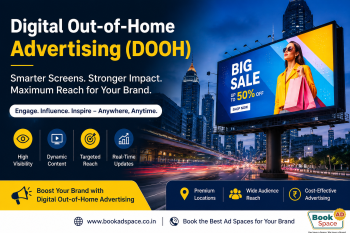
9. Digital Out-of-Home (DOOH) Advertising
Digital Out-of-Home (DOOH) advertising combines traditional outdoor media with digital technology through interactive LED displays, digital screens, and smart advertising networks. Businesses can display real-time content, schedule campaigns, and create engaging customer experiences while maximizing campaign flexibility.
10. Kiosk Advertising
Kiosk advertising places your brand on standalone advertising kiosks located in high-footfall areas such as shopping malls, markets, commercial complexes, and public spaces. It helps businesses attract local customers, increase brand visibility, and promote products or services effectively.
Selecting the right outdoor advertising idea depends on your marketing objectives, target audience, campaign duration, and budget. Whether you choose billboards, transit advertising, mall media, airport branding, or digital displays, the right OOH advertising strategy can help your business build stronger brand awareness and reach more potential customers.
Benefits of Outdoor Advertising
Outdoor advertising offers businesses a powerful way to reach potential customers, build brand awareness, and create lasting impressions. Whether you're targeting local audiences or running a nationwide campaign, Out-of-Home (OOH) advertising provides several advantages that support long-term marketing success.
· High Brand Visibility: Advertisements placed in busy locations capture the attention of thousands of people every day, helping your brand stay top of mind.
· Broad Audience Reach: Outdoor advertising reaches a diverse audience, including commuters, shoppers, travelers, and pedestrians, without relying on internet access.
· 24/7 Brand Exposure: Unlike digital ads with limited display time, outdoor advertisements remain visible around the clock, providing continuous brand exposure.
· Increased Brand Recall: Repeated exposure to billboards, transit ads, and digital displays improves brand recognition and helps customers remember your business.
· Supports Local and Regional Marketing: Businesses can target specific cities, neighborhoods, or high-traffic locations to connect with their ideal audience.
· Complements Digital Marketing: Outdoor advertising works well alongside social media, search engine marketing, and other digital campaigns to create a stronger omnichannel marketing strategy.
· Cost-Effective Long-Term Advertising: Many outdoor advertising formats provide extended visibility over weeks or months, making them a valuable investment for brand awareness campaigns.
· Builds Trust and Credibility: A strong presence in prominent public locations enhances brand credibility and reinforces your business's reputation among potential customers.
By choosing the right outdoor advertising format and location, businesses can increase visibility, strengthen customer engagement, and achieve their marketing objectives more effectively.
Common Outdoor Advertising Mistakes to Avoid
Even the most creative outdoor advertising campaign can underperform if common mistakes are overlooked. Avoid these pitfalls to maximize your campaign's effectiveness and return on investment (ROI).
· Choosing the Wrong Location: Placing advertisements in low-traffic or irrelevant areas can significantly reduce visibility and audience reach.
· Overloading the Design: Too much text, cluttered visuals, or complex graphics make it difficult for people to understand your message quickly.
· Ignoring the Target Audience: Selecting advertising locations without considering your audience's demographics and daily travel patterns can reduce campaign effectiveness.
· Using a Weak Call-to-Action (CTA): Failing to include a clear CTA may prevent potential customers from taking the next step.
· Inconsistent Branding: Using different colors, fonts, or messaging across campaigns can confuse your audience and weaken brand recognition.
· Choosing the Wrong Advertising Format: Not every campaign is suitable for the same medium. Select the format that best aligns with your marketing goals and audience.
· Neglecting Campaign Performance: Failing to track campaign results makes it difficult to understand what worked and identify areas for improvement.
· Ignoring Digital Integration: Adding QR codes, website URLs, or social media handles can encourage customer interaction and connect offline advertising with your digital marketing efforts.
Avoiding these common mistakes can help businesses create impactful outdoor advertising campaigns that improve brand visibility, engage the right audience, and deliver better marketing results.
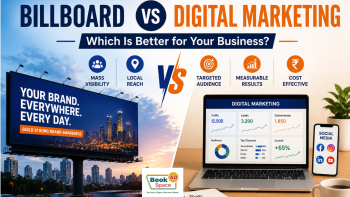
Outdoor Advertising vs Digital Advertising: Which is Better?
Both outdoor advertising and digital advertising play an important role in a successful marketing strategy. While outdoor advertising excels at building brand awareness through high visibility, digital advertising offers precise audience targeting and measurable results. The right choice depends on your business goals, budget, and target audience.
Feature | Outdoor Advertising | Digital Advertising |
Audience Reach | Reaches commuters, shoppers, travelers, and pedestrians in public spaces. | Reaches users online through search engines, social media, websites, and mobile apps. |
Brand Visibility | High visibility in busy locations with continuous exposure. | High visibility across digital platforms with customizable ad placements. |
Targeting | Targets audiences based on geographic location and foot traffic. | Offers advanced targeting based on demographics, interests, behavior, and location. |
Customer Engagement | Creates strong visual impact and improves brand recall. | Encourages clicks, conversions, comments, and direct interactions. |
Campaign Duration | Provides 24/7 visibility throughout the campaign period. | Campaigns can be scheduled, paused, or adjusted in real time. |
Performance Tracking | Measured through estimated impressions, reach, and brand awareness. | Provides detailed analytics, including clicks, impressions, conversions, and ROI. |
Best For | Brand awareness, local promotions, product launches, and long-term visibility. | Lead generation, website traffic, online sales, and customer engagement. |
Cost | Varies depending on advertising format, location, and campaign duration. | Flexible budgets with daily or campaign-based spending options. |
Which is Better?
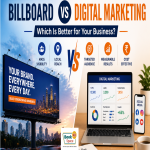
There is no one-size-fits-all answer. Outdoor advertising is ideal for increasing brand visibility and reaching large audiences in high-traffic locations, while digital advertising is better for precise targeting, measurable performance, and driving online conversions. For the best results, businesses should combine both strategies to create an integrated marketing campaign that maximizes reach, engagement, and return on investment.
How to Choose the Right Outdoor Advertising Strategy
Once you've identified the right advertising format, platforms like Book Ad Space can help businesses connect with outdoor advertising service providers based on their campaign goals, preferred locations, and budget.
Consider the following factors before launching your campaign:
· Define Your Campaign Goals: Determine whether your objective is to increase brand awareness, promote a product, generate leads, or advertise an event.
· Understand Your Target Audience: Identify your ideal customers based on their demographics, interests, location, and daily travel patterns.
· Choose the Right Location: Select high-traffic areas such as highways, shopping malls, airports, business districts, or transit hubs where your target audience is most active.
· Select the Best Advertising Format: Choose the most suitable format, such as billboards, digital billboards, transit advertising, mall advertising, bus shelter ads, or airport advertising, based on your campaign objectives.
· Set a Realistic Budget: Allocate your budget according to the advertising format, campaign duration, and desired locations to maximize ROI.
· Create a Clear and Engaging Message: Use concise text, eye-catching visuals, and a strong call-to-action (CTA) that is easy to understand within seconds.
· Plan the Campaign Duration: Decide how long your advertisement should remain live to achieve maximum visibility and brand recall.
· Measure Campaign Performance: Monitor campaign effectiveness using metrics such as brand awareness, customer inquiries, website traffic, QR code scans, or sales to improve future campaigns.
By following these best practices, businesses can develop an effective outdoor advertising strategy that increases visibility, engages the right audience, and supports long-term marketing success.
Future Trends in Outdoor Advertising
The outdoor advertising industry is evolving with new technologies and changing consumer behavior. Businesses that embrace these emerging trends can create more engaging campaigns and stay ahead of the competition.
· Digital Out-of-Home (DOOH) Advertising: Digital billboards and LED displays are becoming increasingly popular, allowing businesses to display dynamic content and update campaigns in real time.
· AI-Powered Advertising: Artificial intelligence is helping advertisers optimize ad placements, personalize content, and improve campaign performance through data-driven insights.
· Programmatic DOOH: Automated media buying enables advertisers to purchase digital outdoor ad space based on audience, location, time, and real-time data.
· Interactive Advertising: QR codes, NFC technology, augmented reality (AR), and touch-enabled displays encourage customers to engage directly with advertisements.
· Data-Driven Campaigns: Businesses are using audience analytics, traffic data, and location insights to create more targeted and effective outdoor advertising campaigns.
· Sustainable Advertising Solutions: Eco-friendly materials, energy-efficient LED displays, and environmentally responsible printing practices are becoming more common in the outdoor advertising industry.
· Omnichannel Marketing Integration: Brands are combining outdoor advertising with digital marketing channels such as social media, search advertising, and mobile campaigns to create a seamless customer experience.
As technology continues to advance, outdoor advertising will become more personalized, measurable, and interactive, helping businesses build stronger brand awareness and connect with their audiences more effectively.
Ready to Launch Your Outdoor Advertising Campaign?
A successful outdoor advertising campaign starts with choosing the right advertising format, location, and audience. Whether you're planning a billboard campaign, mall promotion, airport advertising, transit advertising, or digital OOH campaign, selecting the right service provider can make a significant difference in your campaign's success.
Book Ad Space simplifies this process by connecting businesses with trusted outdoor advertising service providers across multiple advertising formats. Compare advertising options, connect directly with providers, and choose solutions that align with your campaign goals, target audience, preferred locations, and budget. Start planning your next outdoor advertising campaign with confidence and maximize your brand's visibility.
Conclusion
Outdoor advertising continues to be one of the most effective ways to increase brand visibility, engage a wider audience, and create a lasting impression. From billboards and transit advertising to mall promotions and digital OOH displays, choosing the right advertising format can help businesses achieve their marketing goals more effectively.
If you're looking for the right outdoor advertising solution, Book Ad Space helps businesses connect with outdoor advertising service providers across a variety of advertising formats. By selecting the right location, strategy, and service provider, you can maximize your campaign's impact and build stronger brand awareness.
Frequently Asked Questions (FAQs)
1. How much does outdoor advertising cost?
The cost of outdoor advertising depends on several factors, including the advertising format, location, campaign duration, audience reach, and the size of the advertisement. Premium locations such as airports, highways, and shopping malls generally cost more than local advertising spaces.
2. How long should an outdoor advertising campaign run?
Most outdoor advertising campaigns run for 2 to 4 weeks to build brand awareness and maximize audience exposure. However, the ideal campaign duration depends on your marketing objectives, budget, and the type of campaign you're running.
3. Which industries benefit the most from outdoor advertising?
Outdoor advertising is effective for a wide range of industries, including retail, real estate, education, healthcare, hospitality, automotive, entertainment, FMCG, e-commerce, and local businesses looking to increase brand visibility.
4. Can small businesses use outdoor advertising?
Yes. Outdoor advertising is suitable for businesses of all sizes. Small businesses can choose cost-effective options such as pole kiosks, bus shelter advertising, local billboards, or mall advertising to reach customers within their target market.
5. Where can I find outdoor advertising service providers?
Businesses looking for outdoor advertising solutions can use Book Ad Space to connect with outdoor advertising service providers. The platform helps businesses find providers for various advertising formats, making it easier to choose solutions that match their campaign goals and budget.